


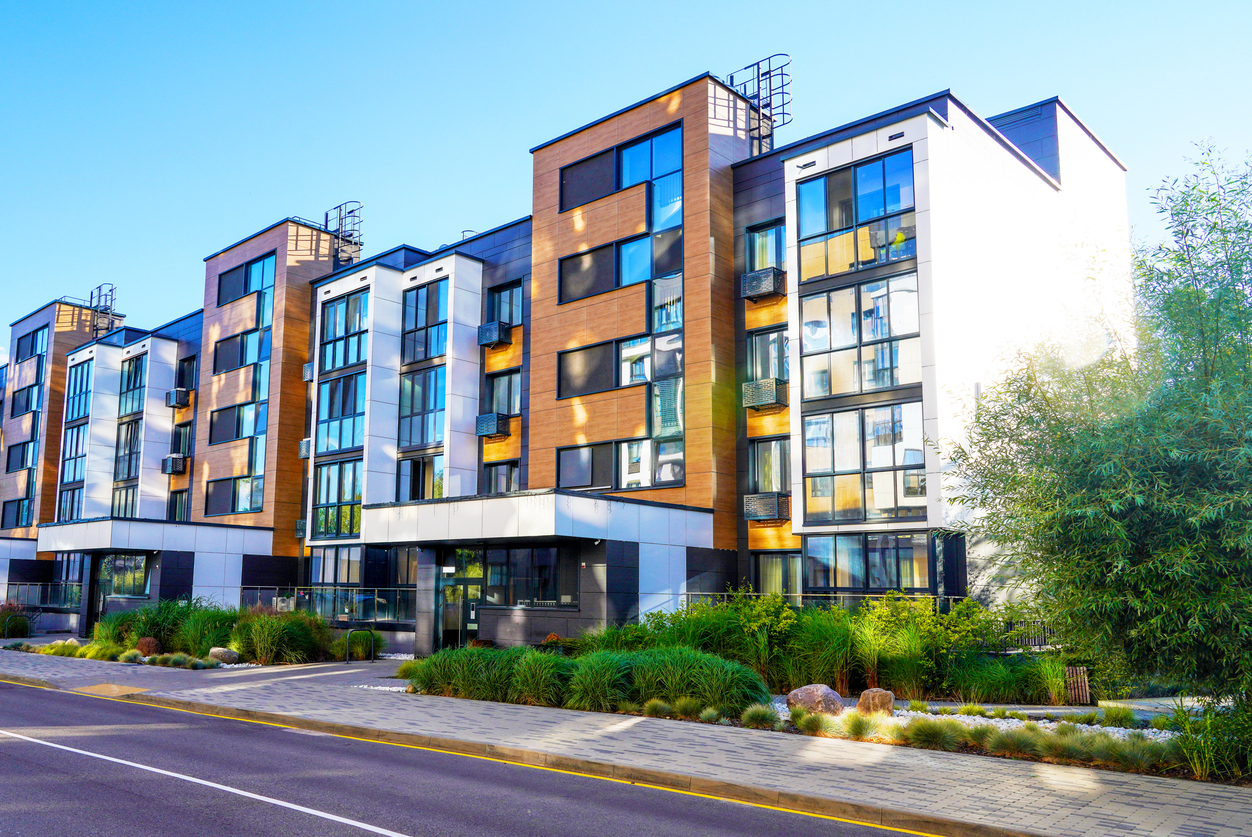
The European housing market faces a crisis that's becoming impossible to ignore. Rising prices have created an almost insurmountable gap between those who want to own homes and those with capital looking for returns, leaving both groups frustrated.
Yet within this tension lies an opportunity: what if homeowners and investors didn't have to choose between their own success? A new model called Aligned Ownership is attempting to answer that question by fundamentally restructuring how we think about real estate partnerships and wealth creation.
The European Housing Crisis: A Problem Built for Both Sides
To understand why Aligned Ownership matters, it's worth looking at what's actually happening in Europe's housing market.
In 2024, housing costs in the EU exceeded 40% of disposable income for 9.8% of households in cities, with Greece hitting an alarming 35.5% of household income spent on housing, the highest in the EU. Between 2015 and 2024, house prices rose 53% on average across the EU, with Hungary jumping 209.5%, Lithuania climbing 135%, and Portugal surging 124.4%. Meanwhile, rents increased by 27.8% from 2010 to early 2025.
The response from policymakers has been serious. In March 2025, the European Commission and the European Investment Bank announced approximately €10 billion in planned investments over two years specifically for affordable and sustainable housing. The EU Parliament has established a special committee on the housing crisis, and housing now ranks as a top priority for the European Commission.
Yet despite these interventions, the fundamental misalignment remains: those who want homes can't afford them, and those with capital struggle to find satisfying returns while managing the complexities of direct property investment.
Why Traditional Models Fall Short for Everyone
The conventional path to homeownership in Europe depends heavily on banks and down payments that have become increasingly detached from what most people earn.
A first-time buyer might have a stable job and sufficient income to cover mortgage payments, but accumulating a 15-20% down payment while rents consume wages has become nearly impossible in expensive markets. Banks reward past stability and existing assets, not potential or future capability.
On the flip side, traditional buy-to-let or direct property investment creates its own headaches.
An investor must commit significant capital, manage the property or pay property managers (typically 6-12% of monthly rent), deal with regulatory complexity that varies wildly by country, and often watch returns diminish as costs rise faster than rental income.
In Switzerland, for example, property prices have risen 40% in real terms since 2013, while rents increased only 12%, creating a risk-reward imbalance that's made buy-to-let less attractive than in previous years.
The result is that homeownership and property investment have drifted into separate worlds, each serving fundamentally different people and incentives.
Introducing Aligned Ownership: A Third Way
Aligned Ownership, pioneered by pinyya, operates on a deceptively simple principle: what if the person living in a home and the person financing it shared the same goals?
In a traditional mortgage, the homeowner and the bank are locked in a transactional relationship. The bank wants predictable payments; the homeowner wants to build equity.
Their interests overlap, but they don't truly align. In a traditional rental, the landlord and tenant have openly competing interests; the landlord wants higher rents and lower vacancies, the tenant wants lower costs and stability. Misalignment is built in.
Aligned Ownership creates a different structure. People who want to own homes partner with investors seeking real estate exposure.
Both benefit when the property appreciates. Both have skin in the game. The model isn't new in concept; community land trusts, shared equity programs, and limited-equity cooperatives have existed in various forms for decades. What's different is applying this framework at scale through a modern fintech platform designed for accessibility and transparency.
Here's how it works:
An aspiring homeowner finds a property and partners with pinyya's network of investors. Instead of trying to save a massive down payment alone or squeezing through a bank's requirements, the aspiring homeowner can start with a smaller equity stake, starting from just 5% of the total property value, opposed to the standard 15-20%.
Investors provide capital in exchange for a share of future appreciation. The aspiring homeowner makes monthly payments that build their ownership over time, without the full burden of a traditional mortgage. Investors get diversified real estate exposure without landlord headaches. pinyya handles the framework.
The Aspiring Homeowner's Advantage: A Real Path Forward
For an aspiring homeowner in an expensive European city, the traditional ownership timeline is essentially broken. Assume a 30-year-old earns €50,000 annually in Vienna. Saving a 20% down payment on a €400,000 apartment while paying €1,500 in monthly rent means saving perhaps €300-400 monthly: a timeline of 33 years just for the down payment, assuming prices don't rise. By then, mortgage terms would be problematic.
Aligned Ownership changes the timeline. An aspiring homeowner can own from day one with a much smaller cash requirement, from 5% rather than 20%. They begin building equity immediately instead of renting and hoping prices don't spiral further beyond reach.
Monthly payments contribute to ownership, not a landlord's profit. Importantly, the aspiring homeowner's commitment creates accountability; they maintain the property well, stay engaged, and make long-term decisions as genuine owners, not temporary occupants.
The model also offers flexibility that traditional mortgages lack. Life circumstances change. An aspiring homeowner might face reduced income, a job transition, or family shifts. Aligned Ownership can accommodate these changes more gracefully than a fixed mortgage, with adjustable terms and exit options to sell equity on the secondary market, designed with transparency rather than penalties. This matters in volatile economies where income stability isn't guaranteed.
As investors' stake diminishes over time and the aspiring homeowner's grows, the aspiring homeowner can eventually buy out remaining ownership interests or, if their situation permits, access the home's appreciation through refinancing, similar to home equity strategies used elsewhere. The structure offers a genuine stepping stone rather than a false choice between renting forever or qualifying under impossible criteria.
The Investor’s Advantage: Diversified, Transparent Exposure
For investors across Europe, real estate remains one of the most reliable paths to long-term wealth creation. Property in prime European locations continues to appreciate. In Greece, for instance, property prices increased 12.4% year-on-year in 2023, with projections of 10-15% further appreciation in prime locations over three years. Yet accessing this upside traditionally demands significant effort or capital concentration.
A person investing through Aligned Ownership avoids the classic landlord headaches. No tenant disputes, no emergency repair calls at midnight, no property management fees eating into returns. The platform handles the operational complexity.
Instead, investors back homes where occupants are genuinely invested owners, not just renters paying until they leave. Research on co-ownership models shows lower maintenance costs and better property stewardship when occupants have a genuine ownership stake; one study found 60% lower repair costs compared to traditional single-family rental funds. When people own, they care differently.
Diversification becomes possible at reasonable capital levels. Rather than putting €250,000 into one property in one city and hoping for the best, a pinyya investor might invest €20,000-30,000 across five properties in different locations. Geographic and asset diversification, long recognized as essential risk management, becomes accessible to ordinary investors, not just institutions. This is particularly valuable in volatile European markets where local economic conditions matter enormously.
Transparency matters too. Many investors are skeptical of traditional real estate investment trusts (REITs) or platforms where they don't know which properties they own, what the true costs are, or how returns are calculated.
Aligned Ownership puts investors directly into named properties with clear economics. They see the aspiring homeowner's commitment, understand the appreciation potential, and know exactly what they're invested in; a psychological and practical advantage that builds confidence.
How Aligned Ownership Solves the Alignment Problem
The genius of the model lies in incentive alignment; a principle as old as finance itself, yet often ignored in real estate. When incentives misalign, people act in self-interested ways that harm others.
Traditional rentals create perverse incentives: landlords benefit from high rents and low maintenance spending, tenants benefit from low rents and repairs. Banks benefit from consistent payments regardless of whether homeowners build wealth. Everyone optimizes for their own interests, and the system becomes adversarial.
Aligned Ownership inverts this. Both aspiring homeowners and investors win when the property appreciates. Both benefit from good maintenance and long-term thinking because both own it. Neither benefits from extracting value at the other's expense because the other is no longer separate-they're partners. This alignment doesn't eliminate all friction, but it fundamentally redirects incentives toward shared success.
This principle shows up in the details. If an aspiring homeowner neglects maintenance, the property declines in value, harming both parties.
If an investor tries to extract excessive returns or impose unreasonable terms, the aspiring homeowner's commitment weakens, eventually affecting the property's performance.
The shared ownership stake creates mutual accountability, not perfect, but radically different from landlord-tenant or bank-borrower dynamics.
The Timing Is Right
European real estate markets are showing deep structural challenges that aligned models can address. Housing remains one of Europe's most significant wealth-building assets, yet the traditional paths have ossified. Regulation and complexity vary enormously by country; a property investment in Germany faces completely different rules than in Portugal, but the underlying tension is universal: people want homes they can't afford, and investors want returns they can't reliably generate.
At the same time, fintech platforms have proven they can handle complexity at scale. Successful models in co-ownership (Pacaso, Kocomo), shared equity (Ownify), and real estate lending (ArborCrowd) show that technology can make distributed property ownership transparent, manageable, and genuinely accessible. The infrastructure now exists to serve both aspiring homeowners and Backers in ways that weren't possible a decade ago.
Realistic Expectations
Aligned Ownership isn't a magic solution. It works best in markets with reasonable price-to-income ratios and growing demand, meaning it's more viable in Berlin or Barcelona than in declining regions. It requires both aspiring homeowners and investors to embrace a new framework, which demands education and comfort with unfamiliar structures. Regulatory approval varies by jurisdiction, and some EU countries remain protective of real estate ownership in ways that could slow adoption.
The model also works best when all parties maintain realistic expectations. An aspiring homeowner isn't getting a free house; they're committing to gradual ownership with shared upside and downside. An investor isn't getting risk-free returns; they're betting on property appreciation and hoping the aspiring homeowner remains engaged. Both need to understand the terms, the time horizons, and the scenarios under which they might need to adjust plans.
Conclusion: A Model for a New World & Changing Market
The gap between those who want homes and those who want returns has become structural, even harmful to European economies and societies.
Waiting for supply to magically increase or prices to somehow become reasonable again isn't a plan. Yet maintaining adversarial models, renters versus landlords, owners versus banks, where one side's gain is the other's loss, won't solve the underlying problem.
Aligned Ownership offers a third path: partnership with aligned incentives, built for the realities of modern European housing markets. For aspiring homeowners, it offers a realistic route to ownership in cities where traditional mortgages have become fantasy. For investors, it provides diversified, transparent exposure to appreciating real estate without landlord duties. For the market itself, it reintroduces the possibility that people can succeed together rather than at each other's expense.
In a housing market where the traditional options have failed millions of Europeans, it represents exactly the kind of innovation the situation demands: thoughtful, transparent, and fundamentally built on the idea that ownership should align the people who actually live in properties with the people who finance them.
