


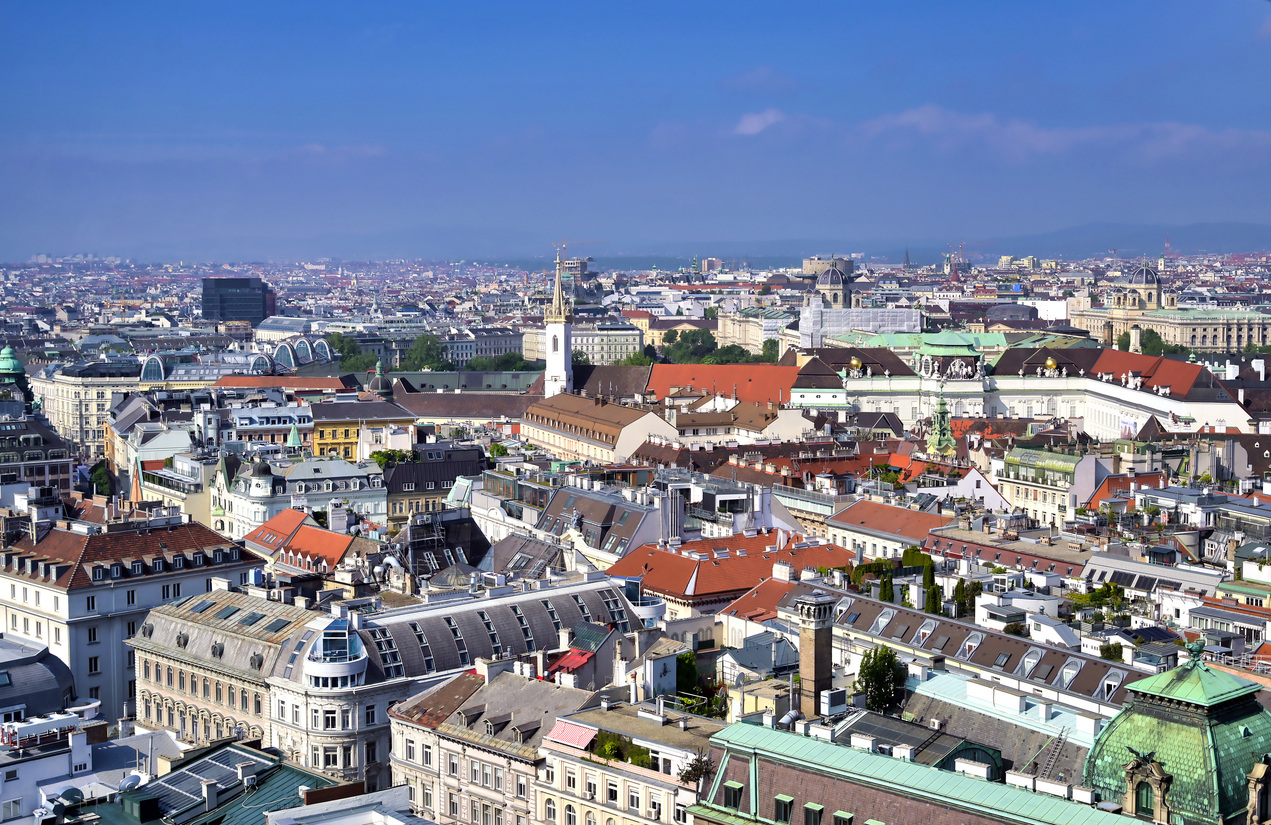
Housing decisions in Vienna, whether buying to live or to invest, have become more complex and more rewarding for those who pay attention. The Austrian capital's property market is stabilizing after years of volatile swings, mortgage rates have come down meaningfully, and new ownership models are emerging alongside traditional purchase paths. If you're considering Vienna as a home or investment destination in 2026, understanding the current landscape, regulation changes, and where value is shifting will make all the difference.
Current Market State: A Shift From Sellers to Buyers
Vienna's property market has undergone a fundamental shift over the past year. After a decade of strong appreciation and a brief period where bidding wars were routine, the dynamics have flipped. According to the latest data, homes in Vienna are now selling closer to asking price rather than above it. In early 2026, sellers who expect 2021-era premiums are seeing their properties sit unsold; those who price realistically are finding willing buyers. This buyer's advantage is genuine, but it's not a free pass, it simply means those with clear information and realistic expectations have time on their side.
Prices, after declining through 2023 and 2024, are stabilizing. Vienna recorded price growth of 2.93% year-on-year in late 2025, outpacing the rest of Austria. At the national level, the Austrian National Bank estimates that property prices sit roughly 7% above what incomes, rents, and building costs would normally justify. Vienna shows a bigger gap (around 16%) meaning the capital is still moderately overvalued but much closer to fair value than it was two years ago. For aspiring homeowners, this suggests room for negotiation; for investors, it signals the worst correction may have passed.
Typical prices in Vienna range widely by district. A median one-bedroom apartment costs around €335,000. A standard 70 square meter apartment runs approximately €470,000, plus €40,000 to €50,000 in closing costs and taxes that many buyers forget to budget. The First District (Innere Stadt), Vienna's historic heart, commands €24,977 per square meter on average, nearly four times the citywide median of €6,700 per square meter. Outer districts like Favoriten, Simmering, and Floridsdorf offer entry points at €4,500 to €5,500 per square meter, with new buildings commanding a premium for energy efficiency.
Financing: A Thaw After Years of Tightness
Mortgage availability in Austria has improved markedly. The ECB cut rates to 2.00% by mid-2025, and the strict KIM-V lending regulation, which had capped how much banks would lend, expired on June 30, 2025. While banks continue to exercise prudence, they now have more flexibility. Current mortgage rates in Austria typically range from 2% to 5%, with an average around 3.37% as of late 2025. For a 30-year fixed rate, most banks finance up to 70% of the property value, with some extending to 80% for strong borrowers. This means putting down 20% to 30% remains the norm, though the gap is narrower than it was during the tightest lending years.
For EU citizens, the process is relatively straightforward. Non-EU buyers face more scrutiny and longer timelines, though it remains possible. The key is a stable income history and clear source of funds. One factor helping both groups: property prices have dipped about 5% since their 2022 peak while household incomes have risen roughly 22%, making the price-to-income ratio far more reasonable than it was two years ago.
New Rental Rules: A Major Shift Starting January 2026
Austria introduced sweeping rental reform on January 1, 2026, fundamentally changing how rents are calculated and indexed. For the first time in Austrian history, the government has intervened in the previously unregulated "free rent" market; new buildings, large apartments over 130 square meters, and some service apartments. From 2026, even these segments now follow a formula: 3% base increase plus half of any inflation above that. For regulated housing (Altbau, municipal apartments, cooperatives), the increase is capped at just 1% through 2026, 2% through 2027, and only from 2028 will the full formula apply.
For property owners and investors, these rules tighten profitability calculations. A property expected to generate income through rising rents will see that income rise more slowly than inflation. For aspiring homeowners considering rent versus buy, the equation has shifted: locked-in rental increases are now limited by law, making the long-term cost of renting more predictable but also making home purchase (with its fixed mortgage) look more attractive by comparison.
Supply: The Real Constraint
Vienna's tightest constraint is new housing supply. Building permits for residential units fell to their lowest level since 2010. Completion figures are expected to stay around 31,000 to 35,000 units per year through 2027, down from nearly 60,000 in 2022. The city government plans a 30% boost in housing construction, raising annual new builds from 10,000 to 13,000, but even that ambitious target won't quickly ease the shortage.
This supply crunch matters most to investors. Rental vacancy in Vienna hovers at just 1% to 2%, among Europe's tightest. Days on market for well-priced rental properties are falling, meaning quality units let quickly. Gross rental yields across Vienna average around 4.5%, with higher returns available in outer districts (up to 5.5% in areas like Favoriten and Floridsdorf) and lower yields in the prestigious center (2% to 3% in District 1). For investors buying to rent, location and property type determine returns far more than overall market direction.
Where to Look: Neighborhoods and Emerging Opportunities
Transformation is happening at the edges. Districts like the 15th and 22nd saw prices rise 11% in 2024, compared to a 7% citywide average. These areas are seeing new infrastructure, renovation activity, and an influx of younger residents priced out of central zones. The U2xU5 metro expansion, though delayed from 2028 to 2030, will benefit underserved areas like parts of Alsergrund and Hernals when it opens, historically lifting nearby property values within a few years.
For aspiring homeowners, well-connected outer districts offer spacious apartments at lower per-square-meter costs. Floridsdorf, in the north, has been popular with first-time buyers. It's undergone rapid development with new schools and parks. Similar dynamics apply to districts 10, 11, and 21. These areas combine affordability with good public transit; a factor that increasingly matters more than raw size.
For investors seeking rental income, the picture is more nuanced. High-income areas near universities (like Alsergrund) or business hubs (Leopoldstadt, Donaustadt) see steady tenant demand. Compact apartments, studios and one-bedroom units under 40 square meters, typically deliver the highest rent per square meter, making them favorites for yield-focused investors, though they appeal to a narrower tenant pool.
Energy Efficiency: A Growing Premium
New construction in Vienna must meet the klimaaktiv standard, which includes efficient heating systems, thermal insulation, solar panels, and smart energy management. This is no longer a niche, it's becoming standard. Energy-efficient homes are already selling for 10% to 15% more than comparable traditional properties. In rental markets, efficient buildings command higher rents and attract longer-term, quality tenants.
For buyers and investors, this trend matters. Properties built or renovated to high efficiency standards will hold value better as energy costs rise and regulations tighten. The Austrian government offers green retrofit incentives and subsidies for upgrading heating systems, making older properties worth considering if you're willing to invest in modernization.
New Ownership Models: Beyond Traditional Purchase
Access to Vienna property ownership is increasingly available through fractional ownership, co-investment structures, and pinyya's new Aligned Ownership model. These approaches reduce upfront capital requirements and can spread both risk and decision-making. Instead of needing €100,000 or more in down payment for a single property, investors can participate in multiple properties with lower individual commitments. Aspiring homeowners can build equity more gradually, sometimes combining rental income from shared properties with a smaller primary residence purchase.
These models require careful evaluation, understanding fee structures, decision rights, and exit paths is essential, but they're becoming legitimate alternatives to all-or-nothing traditional ownership, particularly in expensive markets like Vienna.
Practical Next Steps
For aspiring homeowners, focus on transit-connected districts offering energy-efficient apartments or townhouses. Plan to hold for at least five to seven years to weather any cyclical downturns. For investors, target well-located outer districts with strong rental demand or new-build projects in transformation zones. Use the current buyer's market to negotiate; sellers accepting 3% to 8% discounts below asking price far more often than they did in 2021-2022.
Whichever path you choose, work with local professionals who understand current regulation, financing, and tax implications. Vienna's rental laws and foreign-buyer rules have shifted; your strategy should reflect 2026 reality, not assumptions from years past.
The Vienna market in 2026 is neither a bargain nor a trap. It is fundamentally sound, improving in affordability, and offering more pathways to entry than it did a few years ago. The buyers and investors who win are those who bring clear-eyed realism, do the homework, and move with intention rather than urgency or fear.
